
Technology & equipment 2 min read
The Solar Inverter: The Heart of Your Plant — Types and How to Choose
What the inverter does in a solar plant, the difference between string, central, micro and hybrid inverters, and how to choose size and brand.
 GPS Engineering Team
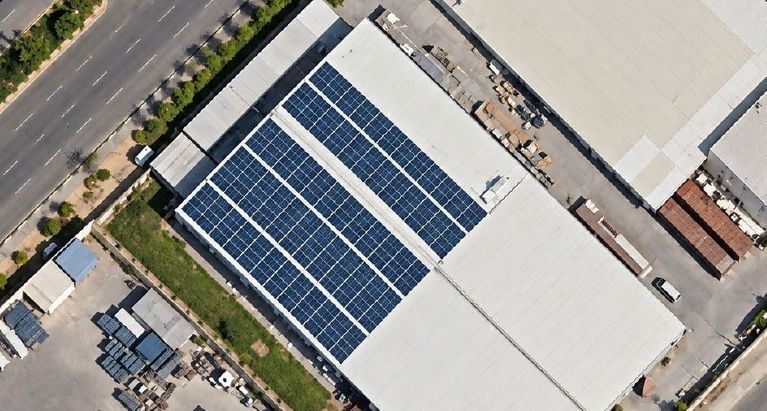
If panels are the muscles, the inverter is the brain and heart of the plant: it converts power, tracks the best operating point, protects the system and reports monitoring data. It is also the most sensitive component, so choosing it carefully saves a lot of trouble.
Key takeaways
- The inverter converts DC from the panels into AC and tracks the maximum power point (MPPT).
- String inverters suit most factories, hotels and homes.
- The DC/AC ratio is usually between 1.1 and 1.3.
- Choose a brand with an agent, spare parts and technical support in Egypt.
What the inverter does
- Conversion: DC to AC at grid voltage and frequency.
- MPPT: continuously adjusts operation to extract maximum power from the panels.
- Protection: disconnects on faults or grid loss (anti-islanding).
- Monitoring: sends production and alarms to a phone platform.
Inverter types
| Type | Use | Pros | Cons |
|---|---|---|---|
| String | Homes, factories, hotels | Flexible, easy service, multiple MPPTs | – |
| Central | Large ground plants | Lowest cost per kW at MW scale | One fault stops a big block |
| Micro | Complex shaded roofs | Panel-level control | Highest cost |
| Hybrid | Battery systems | Storage and backup power | Pricier than string |
| Pump inverter | Solar irrigation | Drives the pump directly | Pumps only |
Sizing the inverter
The inverter needn’t match the array rating. Because panels rarely produce their full nameplate power (heat and dust), we usually design at a ratio of 1.1–1.3, lowering cost with negligible loss of yield.
Choosing a brand
- Accepted on distribution-company lists for net metering.
- An official agent in Egypt and available spares.
- Enough MPPT inputs for your roof orientations.
- An easy monitoring platform.
- A 5–10 year warranty with extension options.
When is an inverter replaced?
Inverters usually live shorter than panels, so a feasibility study allows for one replacement over the plant’s life. Continuous monitoring and maintenance extend inverter life.
Also read: smart plant monitoring.
An engineer visits to measure the space, review consumption and give a final quote.

How much would your plant save?
Get system size, cost and expected savings in under a minute.
GPS engineers have designed and built solar plants across Egypt for 15+ years. Here they share what they learn in the field.
Frequently asked questions
Are inverters noisy?
Modern inverters are very quiet; some have light fan noise at high output, so we place them away from bedrooms and offices.
Can the plant run without internet?
Yes. Internet is only needed for monitoring, not for operation.
Keep reading
 Technology & equipment
On-Grid, Off-Grid or Hybrid? Which Solar System Is Right for You
A clear comparison of on-grid, off-grid and hybrid solar systems: how they work, cost, pros and cons, and when to choose each.
 Technology & equipment
Solar Panel Types: Mono, Poly, Bifacial, TOPCon and HJT — Which Is Best?
A simple guide to the panel technologies available in 2026, how they differ in efficiency, heat performance and lifespan, and when bifacial…
 Technology & equipment
Solar Batteries: Lithium or Lead-Acid? A Buyer's Guide
A practical comparison of lithium iron phosphate and lead-acid batteries by lifespan, depth of discharge and true cost, and when you need…
 Technology & equipment
Solar Panel Maintenance: A Practical Schedule for Maximum Output
A clear maintenance schedule for solar plants: what to check daily, monthly and yearly, how to catch faults early and keep your…
 Technology & equipment
Cleaning Solar Panels in Desert Conditions: How Often and How?
Dust is one of the biggest causes of lost output in Egypt. Learn the right cleaning frequency, safe methods and common mistakes…
 Technology & equipment
Do Solar Panels Work in Extreme Heat? How Temperature Affects Efficiency
Heat lowers panel efficiency slightly, but strong sunshine more than compensates. Understand the temperature coefficient and how we design for Egyptian summers.
 Technology & equipment
Solar Warranties Explained: What a 25- or 30-Year Warranty Really Covers
The difference between product, performance and workmanship warranties, what voids them, and how to protect yourself before signing.
 Technology & equipment
Smart Solar Monitoring: Why Your Plant Shouldn't Run Without It
How solar monitoring works, which indicators to watch, and how it catches faults early and protects your investment.