
Technology & equipment 2 min read
Solar Panel Tilt and Orientation in Egypt: Getting the Most Output
What is the best panel tilt in Cairo, Aswan and Alexandria, and is facing south essential? A practical guide to tilt, orientation and spacing.
 GPS Engineering Team
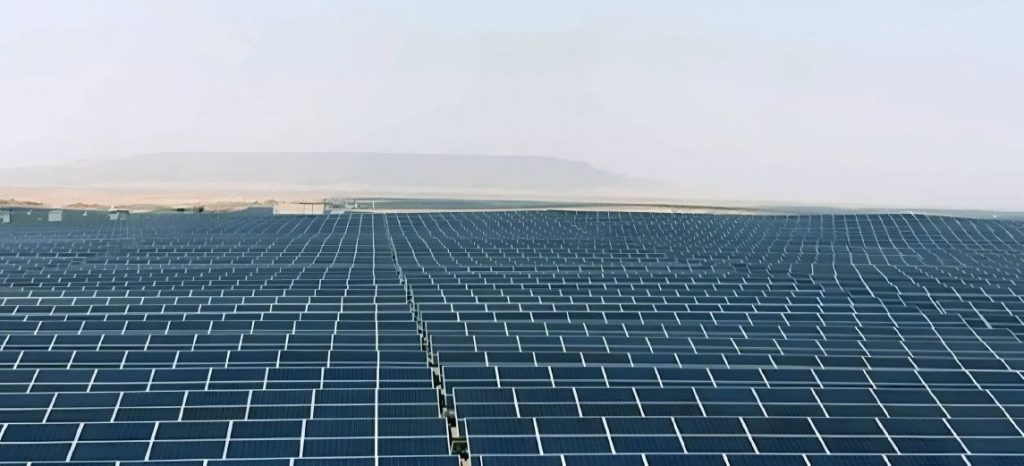
The direction your panels face and their tilt determine how much light they collect all year. A small design error can cost noticeable output for 25 years; smart design balances yield against space.
Key takeaways
- The ideal orientation in Egypt is true south.
- The optimal annual tilt is close to latitude minus a few degrees: roughly 20–28°.
- Commercial roofs often use lower tilts (10–15°) to fit more panels.
- East–west layouts are excellent when space is limited.
Optimal tilt by city
| City | Approx. latitude | Approx. optimal annual tilt |
|---|---|---|
| Aswan | 24° | 20°–22° |
| Luxor | 25.7° | 22°–24° |
| Hurghada | 27.3° | 23°–25° |
| Cairo | 30° | 25°–27° |
| Alexandria | 31.2° | 26°–28° |
Why not always use the “optimal” angle?
Steeper tilts cast longer shadows on the row behind, so rows must be spaced further apart — meaning fewer panels on the same roof. On commercial and industrial roofs we often use a lower tilt that fits more panels, so total output is higher even if each panel produces a little less.
East–west layouts
Rows facing each other with a shallow tilt to the east and west:
- Fill the roof at high density.
- Spread production across the day (morning and afternoon), which suits self-consumption.
- Reduce wind loads.
Dust and tilt
Steeper tilts help dust slide off, while very shallow tilts (under 10°) need more frequent cleaning. Read cleaning panels in desert conditions and space requirements for solar.
An engineer visits to measure the space, review consumption and give a final quote.

How much would your plant save?
Get system size, cost and expected savings in under a minute.
GPS engineers have designed and built solar plants across Egypt for 15+ years. Here they share what they learn in the field.
Frequently asked questions
Can panels face north?
In Egypt a northern orientation noticeably reduces output and is only advised at very low tilt when there is no alternative.
Should I change the tilt between summer and winter?
Possible with adjustable frames, but the gain is small for the effort, so we usually design a fixed, annually optimal tilt.
Keep reading
 Technology & equipment
On-Grid, Off-Grid or Hybrid? Which Solar System Is Right for You
A clear comparison of on-grid, off-grid and hybrid solar systems: how they work, cost, pros and cons, and when to choose each.
 Technology & equipment
Solar Panel Types: Mono, Poly, Bifacial, TOPCon and HJT — Which Is Best?
A simple guide to the panel technologies available in 2026, how they differ in efficiency, heat performance and lifespan, and when bifacial…
 Technology & equipment
The Solar Inverter: The Heart of Your Plant — Types and How to Choose
What the inverter does in a solar plant, the difference between string, central, micro and hybrid inverters, and how to choose size…
 Technology & equipment
Solar Batteries: Lithium or Lead-Acid? A Buyer's Guide
A practical comparison of lithium iron phosphate and lead-acid batteries by lifespan, depth of discharge and true cost, and when you need…
 Technology & equipment
Solar Panel Maintenance: A Practical Schedule for Maximum Output
A clear maintenance schedule for solar plants: what to check daily, monthly and yearly, how to catch faults early and keep your…
 Technology & equipment
Cleaning Solar Panels in Desert Conditions: How Often and How?
Dust is one of the biggest causes of lost output in Egypt. Learn the right cleaning frequency, safe methods and common mistakes…
 Technology & equipment
Do Solar Panels Work in Extreme Heat? How Temperature Affects Efficiency
Heat lowers panel efficiency slightly, but strong sunshine more than compensates. Understand the temperature coefficient and how we design for Egyptian summers.
 Technology & equipment
Solar Warranties Explained: What a 25- or 30-Year Warranty Really Covers
The difference between product, performance and workmanship warranties, what voids them, and how to protect yourself before signing.